Ireland:
  US:
US:  Canada:
  Australia:
  India:
  UK:
UK: 
What Is the UK Foundation Programme?
Posted on 05 Oct 2026

Graduating from medical school is a major milestone, but it is not the end of medical training. For doctors planning to begin their careers in the UK, understanding what the UK Foundation Programme is can help clarify what happens after medical school and how newly qualified doctors move towards greater clinical responsibility. The UK Foundation Programme is a structured period of postgraduate medical training that bridges the gap between medical school and more specialised clinical practice. It combines supervised clinical work with structured training and gives newly qualified doctors experience across different areas of medicine before they move towards specialty or general practice training. Understanding where the Foundation Programme sits in the wider pathway is particularly important for students who are studying medicine outside the UK but are considering returning to work there after graduation.
What Is the UK Foundation Programme?
The UK Foundation Programme is a two-year, work-based training programme for newly qualified doctors. It consists of Foundation Year 1, commonly known as F1, followed by Foundation Year 2, or F2, and is intended to support the transition from medical school into more independent clinical practice. Foundation doctors work in real clinical environments while continuing to learn under supervision. They normally rotate through different specialties, gaining experience of caring for patients, working within healthcare teams and managing the responsibilities that come with being a doctor. The programme is therefore both employment and postgraduate medical training. Foundation doctors are qualified doctors, but they are still developing the broad clinical and professional skills required before progressing into more specialised areas of medicine.Where Does the Foundation Programme Fit Into Medical Training?
For a typical UK medical graduate, the Foundation Programme follows completion of medical school and precedes specialty or general practice training. It is designed to create a broad clinical foundation before doctors make increasingly specialised career decisions. The overall pathway can therefore be viewed as medical school, followed by foundation training, followed by specialty training or GP training. The exact length of the later stages depends on the career chosen, and some doctors also take time between training stages for research, additional qualifications, clinical fellow posts or experience in another healthcare system. For students studying medicine abroad, the route can be less straightforward because the transition into UK postgraduate training may depend on the structure of the medical degree, any internship already completed and the registration route that applies at the time. The GMC is therefore part of the picture for international graduates, but it is only one element of a wider postgraduate pathway that also includes eligibility, training history and the type of programme being entered.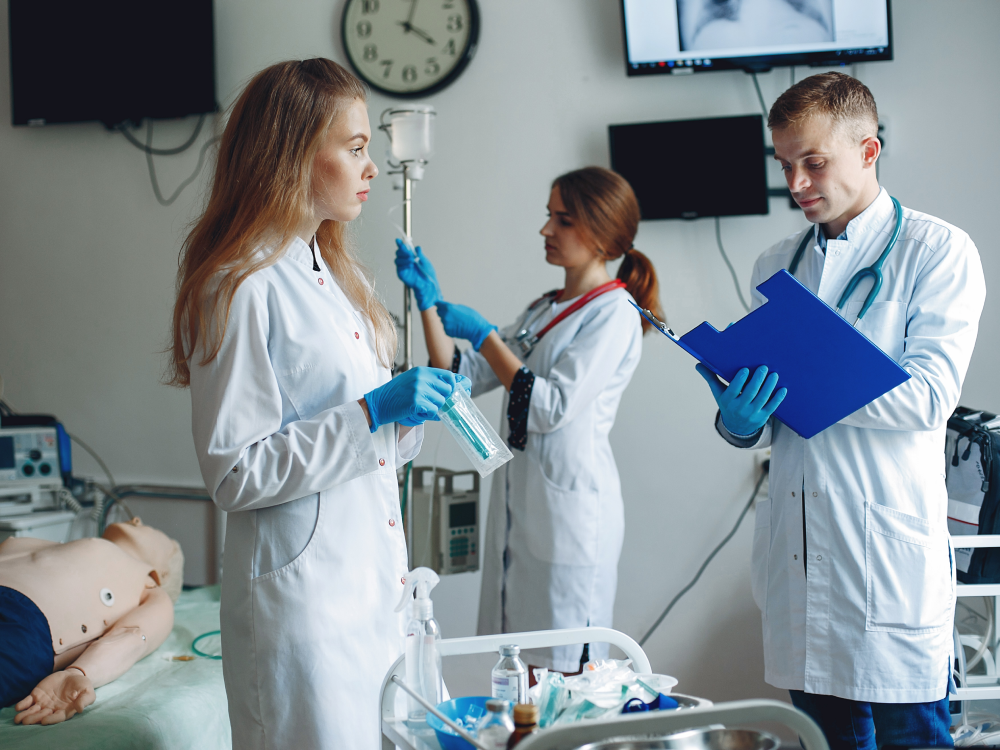
What Happens During Foundation Year 1?
F1 is the first year of the Foundation Programme and represents the initial period of supervised medical practice for doctors entering through the two-year programme. Doctors work as members of clinical teams while developing experience in areas such as assessing patients, prescribing, communicating with colleagues and families, maintaining clinical records and responding appropriately when a patient’s condition changes. Supervision remains an important part of the year. Newly qualified doctors are not expected to know everything from their first day, and F1 is specifically intended to allow them to develop their clinical judgement within a supported working environment. Successful completion of F1 is also an important progression point. For doctors entering through the standard route, it is the stage at which they move from provisional to full GMC registration before progressing further in approved postgraduate training.What Happens During Foundation Year 2?
F2 continues the development started during F1 but gives doctors greater responsibility and exposure to a wider range of clinical situations. By this stage, doctors are expected to become more confident in assessment, decision-making, communication and managing patients while still working within an appropriately supervised environment. The second year is also an important period for career development. Doctors may gain experience in specialties they are considering for the future and start preparing more actively for applications to GP or specialty training. F2 should therefore not be viewed simply as another year of general hospital work. It is the point at which many doctors begin connecting their broad foundation training with the direction they may eventually take within medicine.Why Does the Foundation Programme Include Different Specialties?
Newly qualified doctors need broad experience before specialising. A future psychiatrist, surgeon or GP may ultimately work within a particular branch of medicine, but all doctors benefit from understanding how different conditions interact and how patients move between different parts of the healthcare system. Foundation posts are therefore organised into rotations. The specialties included vary between individual programmes, but doctors may encounter areas such as general medicine, surgery, emergency medicine, psychiatry, paediatrics or community-based care during their foundation training. Working in several settings also helps doctors understand what different careers are actually like. Medical students inevitably form impressions of specialties during university, but working as a doctor brings a different perspective on workload, teamwork, decision-making and the everyday responsibilities associated with each field.Is the Foundation Programme the Same as Medical School Clinical Rotations?
No. Clinical rotations during medical school and the Foundation Programme serve different purposes, even though both take place in healthcare environments. During medical school, students remain learners working under supervision and do not hold the same responsibilities as qualified doctors. Clinical placements are designed to help students develop the knowledge, communication skills and practical experience required to graduate safely. Foundation doctors have already completed their medical degree and are employed as doctors. Their training remains supervised, but they assume responsibilities that medical students do not have. The distinction is particularly important for students completing clinical education abroad who intend to work in the UK afterwards. Students exploring European or Caribbean medical programmes through Study Medicine Europe, for example, should distinguish between completing clinical rotations as part of the medical degree and completing postgraduate foundation or internship training after graduation. Both involve clinical learning, but they occur at different stages of the medical career. Students can also explore Study Medicine Europe’s medical programmes and clinical rotation options when considering their long-term pathway.Can International Medical Graduates Enter the UK Foundation Programme?
International medical graduates can be eligible for the UK Foundation Programme, but eligibility depends on their individual circumstances. Factors can include the medical qualification held, whether an internship has already been completed and the requirements that apply to the relevant application year. The GMC registration route also matters because the standard two-year Foundation Programme is designed around applicants who are eligible for provisional registration. Graduates who have already completed an acceptable internship and qualify for full registration may need to follow a different route into UK medical employment or postgraduate training. This means there is no single answer that applies automatically to every graduate from a university outside the UK. Two international graduates may have completed different types of training and may therefore need to follow different pathways after graduation.What Does This Mean for Students Studying Medicine in Europe?
A significant number of UK students choose to study medicine elsewhere in Europe, including English-taught programmes in countries such as Greece, Bulgaria, Romania, Serbia, Georgia and Armenia. Study Medicine Europe works with medical universities across these destinations, each of which has its own curriculum, graduation structure and approach to clinical training. Students who ultimately want to practise in the UK should therefore think beyond admission to medical school. They need to understand how the degree they complete abroad fits into the postgraduate pathway they hope to follow after graduation. The important issue is not simply where the degree was awarded, but what the graduate has completed by the time they are ready to start work. Course structure, clinical training, internship arrangements and the relevant GMC registration route can all influence the next step, which is why students should avoid relying on assumptions based on another student’s experience several years earlier. For students comparing European options, Study Medicine Europe provides information on studying medicine in Europe, including programme structures and clinical training opportunities.What About Students Studying Medicine in the Caribbean?
Caribbean medical education can follow a different structure from many European courses. Some programmes combine a Basic Sciences phase with clinical education completed in hospitals elsewhere, including placements in the UK or U.S., while others have different arrangements for clinical training. Study Medicine Europe lists medical study options in Anguilla, St Vincent, Barbados and Saint Lucia alongside its European programmes. For students considering a future UK career, the location of the university alone does not determine the postgraduate route; the structure of the degree, clinical experience completed and registration requirements after graduation are also important. Students should therefore avoid assuming that studying in the Caribbean either automatically provides or prevents access to UK postgraduate medicine. The appropriate route needs to be considered in relation to the individual medical school, the student’s completed training and the GMC requirements in force when the graduate applies.What Happens After the Foundation Programme?
Completing foundation training opens the next stage of postgraduate medical development. Doctors can apply for GP training or one of the many specialty training pathways, although the structure and competitiveness of those pathways vary considerably. Some doctors move directly into further training, while others spend additional time building experience before making a final career decision. Clinical fellow roles, teaching posts, research and work outside the UK can all form part of the period after foundation training. This flexibility is one reason the Foundation Programme is deliberately broad. Doctors do not need to have their entire career mapped out on the day they graduate from medical school, and experience across different specialties can help them make better-informed choices.